
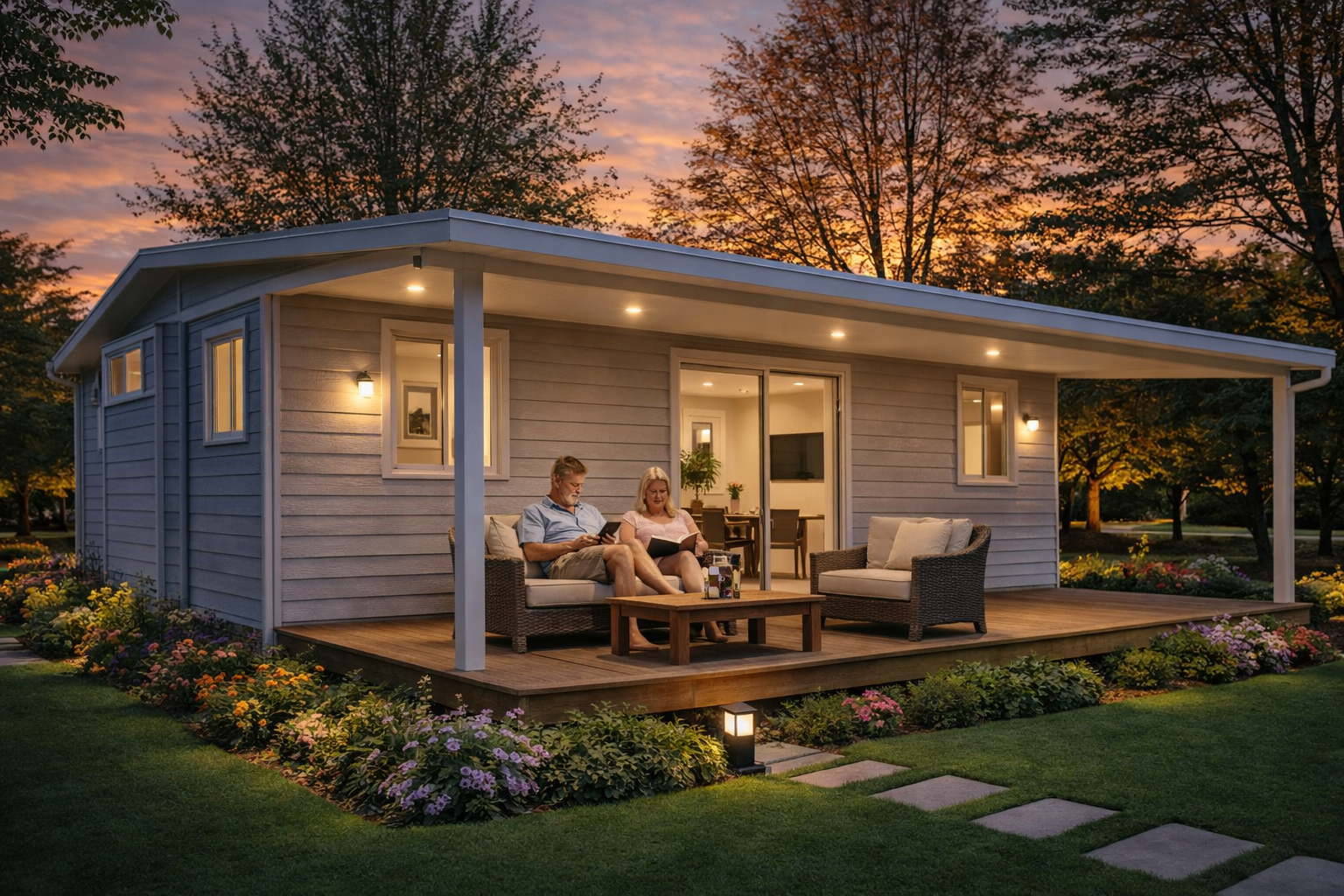
Over the past decade, granny flats have shifted from being a niche housing solution into one of the most strategically powerful property moves available to Australian homeowners.
What was once considered a simple backyard dwelling is now widely recognised as a multi-dimensional asset—one that can simultaneously increase property value, generate rental income, and provide long-term flexibility for changing family needs.
This shift has not happened by accident. It has been driven by rising property prices, increasing rental demand, and a growing need for adaptable living arrangements. For many homeowners, the traditional pathways to building wealth through property—such as purchasing a second investment—have become increasingly difficult due to lending constraints and capital requirements.
Granny flats offer a fundamentally different approach.
Instead of acquiring new land, you are leveraging an asset you already own. Instead of taking on the risk of a second mortgage on a separate property, you are enhancing the income-generating capacity of your existing one.
However, while the opportunity is significant, the outcome is highly dependent on how the project is executed.
A well-designed, properly approved, and professionally built granny flat can become a high-performing asset. Poor decisions—particularly around design, builder selection, and approvals—can quickly erode both financial returns and overall experience.
This guide is designed to give you a clear, detailed understanding of how to approach a granny flat project the right way.
What is a Granny Flat (And What It Isn’t)
At a surface level, a granny flat is a self-contained secondary dwelling built on the same lot as a primary residence. It includes its own kitchen, bathroom, living space, and sleeping area, allowing it to function independently from the main house.
But the more important distinction is not what it is physically—it’s how it is classified and regulated.
In New South Wales and many parts of Australia, granny flats fall under specific planning pathways that allow them to be approved more efficiently than full residential developments. The most common pathway is the Complying Development Certificate (CDC), which enables approval through a private certifier rather than going through a full council Development Application process.
This distinction is critical because it directly affects:
- Approval timelines
- Project costs
- Complexity and risk
Under CDC guidelines, granny flats are typically limited to a maximum internal floor area of 60 square metres, along with specific requirements around setbacks, site coverage, and access.
If a property does not meet these criteria, approval can still be achieved through a Development Application (DA), although this process is generally longer and more variable depending on council regulations.
Understanding this early is essential. One of the most common mistakes homeowners make is assuming their property will qualify under CDC without proper assessment, only to encounter delays or redesign costs later.
Why Granny Flats Have Become a Strategic Property Tool
The growing popularity of granny flats is not simply due to affordability—it is due to their ability to solve multiple problems at once.
From a financial perspective, they represent one of the few ways to create an additional income stream without purchasing another property. From a lifestyle perspective, they provide flexibility that traditional homes often cannot.
To understand their real value, you need to look at the underlying drivers.
Rental Demand and Income Potential
Australia’s rental market has experienced sustained pressure over recent years, particularly in metropolitan areas. Vacancy rates have tightened, and rental prices have steadily increased.
In this environment, well-designed granny flats are in strong demand. They appeal to a wide range of tenants, including singles, couples, downsizers, and small families seeking more affordable accommodation options.
Depending on location and specification, granny flats commonly achieve rental returns in the range of $500 to $600 per week. Over the course of a year, this translates into a substantial income stream that can significantly offset mortgage repayments or contribute to overall cash flow.
In many cases, projects can be structured so that they are positively geared, meaning the rental income exceeds the holding costs of the build.
Property Value Uplift
Beyond rental income, granny flats also contribute to capital growth by increasing the functional utility of the property.
A property with dual living capability is inherently more valuable than one with a single dwelling, particularly in markets where housing affordability is constrained.
Industry estimates suggest that adding a granny flat can increase property value by approximately 10–30%, depending on the quality of the build and the overall integration with the existing site.
However, it is important to understand that this uplift is not automatic. Poor design, low-quality finishes, or awkward placement can limit the perceived value and reduce buyer appeal.
Lifestyle Flexibility
Financial benefits are only part of the equation. For many homeowners, the primary motivation is flexibility.
Granny flats allow for:
- Independent living arrangements for elderly parents
- Accommodation for adult children
- Private guest housing
- Home office or studio space
This adaptability becomes increasingly valuable over time as family circumstances change.
The Critical Role of Design
Design is often underestimated in granny flat projects, but it is one of the most influential factors in determining both rental performance and long-term usability.
Unlike larger homes, granny flats operate within tight spatial constraints. Every design decision must balance functionality, comfort, and compliance.
A well-designed granny flat does not feel small—it feels efficient.
Space Efficiency and Layout
The most effective layouts minimise wasted space and prioritise open-plan living. Hallways, unnecessary partitions, and oversized rooms should be avoided in favour of fluid, connected spaces that maximise usability.
Open-plan kitchen, dining, and living areas create a sense of openness and allow natural light to flow more effectively throughout the space.
Natural Light and Ventilation
Access to natural light is one of the simplest yet most powerful ways to improve perceived space.
Large windows, sliding doors, and thoughtful orientation can transform the feel of the interior. Cross ventilation also plays a key role in maintaining comfort, particularly in warmer climates.
Privacy Considerations
One of the most overlooked aspects of granny flat design is privacy—both for the occupant of the granny flat and the residents of the main dwelling.
Strategic placement, fencing, landscaping, and separate access points can significantly improve the living experience for both parties.
Finishes and Inclusions
The level of finish directly impacts tenant appeal and rental return.
Higher-quality inclusions such as stone benchtops, polyurethane cabinetry, and full-height bathroom tiling not only enhance the visual appeal but also improve durability and reduce maintenance over time.
Many builders offer bundled upgrade packages that provide these inclusions at a reduced cost, representing strong value when viewed from a long-term investment perspective.
Choosing the Right Builder (Where Most Projects Succeed or Fail)
The selection of a builder is arguably the most important decision in the entire process.
Granny flats are not simply smaller houses—they involve specific regulatory frameworks, design constraints, and construction considerations that require specialised experience.
A builder who primarily focuses on standard residential construction may not have the depth of knowledge required to navigate these nuances effectively.
Experience and Specialisation
A proven track record in granny flat construction is essential. Builders who have completed hundreds or thousands of projects bring a level of predictability and efficiency that cannot be replicated by generalists.
They understand:
- Approval pathways
- Site constraints
- Cost structures
- Design optimisation
Transparency and Fixed Pricing
One of the key risks in construction projects is cost escalation.
Professional builders mitigate this risk through fixed-price contracts and clear inclusion schedules. This ensures that clients understand exactly what is included and reduces the likelihood of unexpected variations.
Risk Reduction Through Guarantees
High-quality builders differentiate themselves through the guarantees they offer.
These may include:
- Structural warranties beyond industry standards
- Extended maintenance periods
- Approval guarantees
- Rental guarantees in the event of delays
These measures are not simply marketing tools—they are mechanisms designed to reduce client risk and increase confidence in the process.
The Construction Process (What to Expect)
A well-managed granny flat project follows a structured, step-by-step process designed to minimise uncertainty and maintain momentum.
The journey typically begins with a site assessment, where feasibility is confirmed and any constraints are identified. This stage is critical, as it sets the foundation for all subsequent decisions.
From there, the project moves into design and approvals. During this phase, the floor plan is developed, documentation is prepared, and the necessary approvals are obtained. This process usually takes between six and eight weeks, depending on complexity.
Construction follows, generally spanning 18 to 20 weeks. During this time, the site is established, the build progresses through defined stages, and regular updates are provided to ensure transparency.
At completion, a final walkthrough is conducted before handover, ensuring that all aspects of the build meet the required standards.
Common Mistakes That Undermine Projects
Despite the relatively straightforward nature of granny flat construction, there are several recurring mistakes that can significantly impact outcomes.
Choosing a builder based purely on price is one of the most common. Lower quotes often exclude essential components or rely on lower-quality materials, leading to higher costs in the long run.
Another frequent issue is failing to properly assess site compliance before commencing design. This can result in costly redesigns or approval delays.
Overbuilding is also a risk. Adding unnecessary features or exceeding what the rental market demands can reduce overall return on investment.
Conclusion
Granny flats represent a unique intersection of affordability, flexibility, and financial performance.
When approached correctly, they offer a pathway to:
- Generate consistent income
- Increase property value
- Adapt to changing lifestyle needs
However, the success of the project depends on making informed decisions at every stage—from understanding approvals and optimising design, to selecting the right builder and managing the construction process effectively.
In a market where property decisions carry significant financial weight, a well-executed granny flat is not just an addition to your home—it is a strategic asset that continues to deliver value over time.
Contact Us for further insights.