
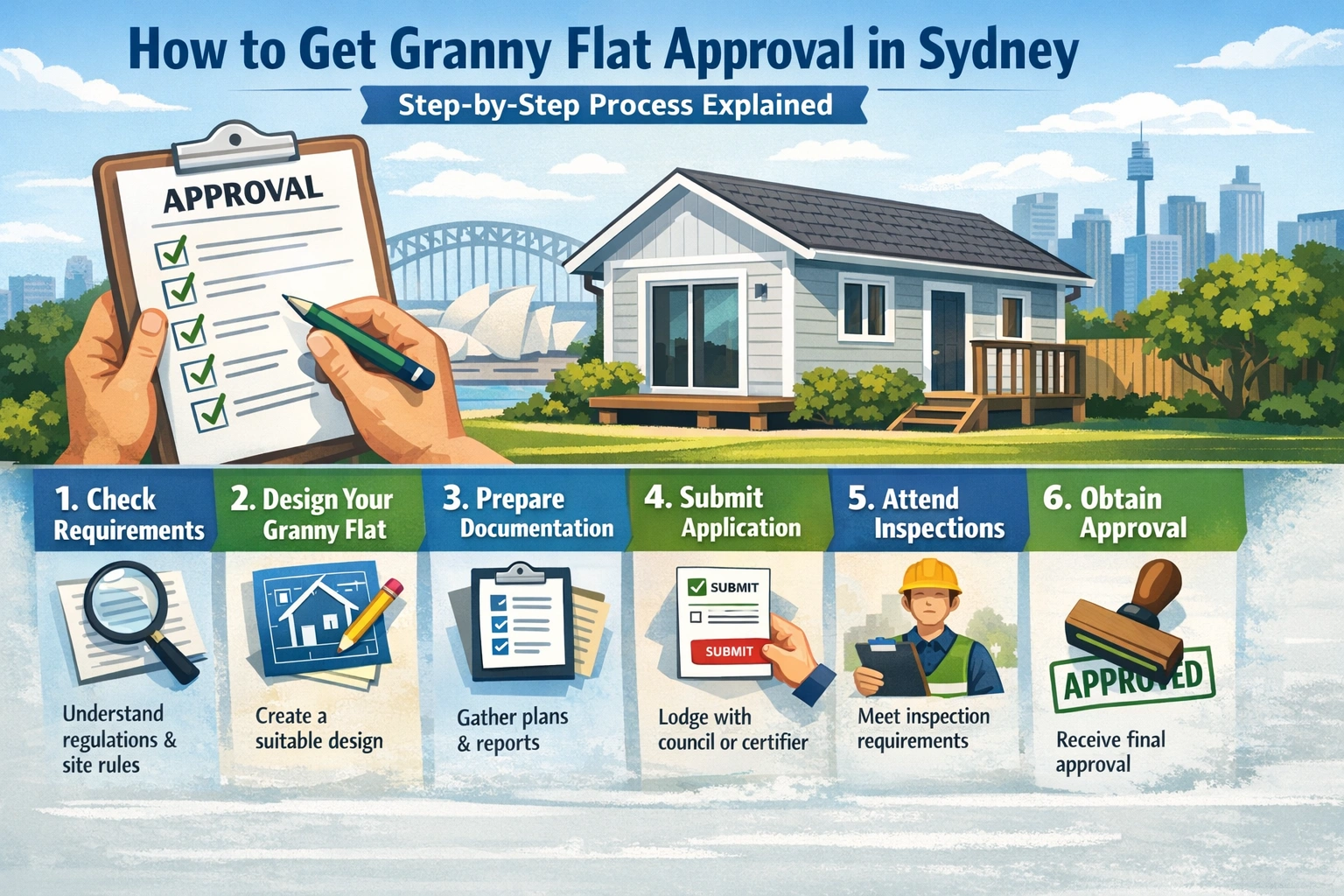
Sydney’s property market doesn’t exactly whisper “affordable housing.” It shouts the opposite. That’s why more homeowners are turning to secondary dwellings as smart, flexible investments. Whether you want rental income, space for family, or a private home office that doesn’t double as your kitchen table, the demand for granny flats has surged across Sydney.
But here’s the thing: granny flat approval isn’t just about sketching a design and calling a builder. There’s a structured legal pathway that ensures your project meets planning rules, safety standards, and local council expectations. When done correctly, the process is surprisingly straightforward. When done incorrectly, it can delay your build for months.
In this guide, I’ll walk you through the exact step-by-step process to secure granny flat approval in Sydney, explain common mistakes, and show how young professionals are using granny flats to create lifestyle flexibility and long-term property value.
What Is a Granny Flat and Why Sydney Loves Them
A granny flat is a separate living space built on the same property as an existing home. It has all the important parts, like a bedroom, bathroom, kitchen, and living room. Granny flats in Sydney have changed from simple structures in the backyard to stylish micro-homes that fit in with modern life.
More and more young homeowners see granny flats as smart investments. Some people use them to make money by renting them out, some to live with their families, and many to work from home in a hybrid way. The appeal comes from the fact that it can be used in many ways. A well-planned granny flat can change with your needs without needing a full property upgrade.
Most councils in Sydney support the building of granny flats because it adds to the housing supply without needing to expand the city. But it’s still important to follow the rules for getting approval to make sure that planning policies are followed.
Understanding Granny Flat Approval in Sydney
Before building can start, you need to get granny flat approval, which is the legal permission. This approval means that the design follows all the rules for zoning, building, and safety.
In New South Wales, granny flats are usually approved under the State Environmental Planning Policy (SEPP), which lets some properties skip the long process of applying for development. A Complying Development Certificate (CDC) is what this path is called, and it is often the quickest way to get approval.
But not every property automatically meets the requirements. Things like the size of the land, the zoning classification, the setbacks, and the access requirements all affect how smoothly your granny flat approval will go.
Many people think that getting approval is hard, but in reality, most delays are caused by missing paperwork or unclear design specs. Getting the basics right from the start speeds up the process a lot.
Step 1: Check Property Eligibility
Before designing or budgeting, you must ensure that your property is eligible to receive the approval of a granny flat as per the NSW requirements.
In most cases, your property should comply with the minimum land size requirements and zoning regulations. The minimum size of a site required by most councils is 450 square metres, but this may vary depending on the location and overlay constraints.
You also need to leave sufficient space in your block to provide setbacks, access paths that are private and open space. These regulations allow the secondary dwelling not to infringe on the privacy of the neighbours or overcrowding the site.
A significant number of homeowners in Sydney find that they do have a property that they can use but with minor modifications to fit the compliance. Before plans are submitted, a competent assessor can be able to detect in a short time whether alterations are necessary.
Step 2: Understand Zoning and Planning Regulations
Zoning controls determine whether granny flats are permitted on your land. Residential zones typically allow secondary dwellings, but heritage overlays or environmental restrictions can introduce additional requirements.
Some areas require design considerations that maintain neighbourhood character. This might include roof pitch alignment, exterior material choices, or landscaping requirements.
To verify zoning details, you can review the official NSW planning guidelines via the government resource below:
To understand the legal requirements, you can review the official NSW granny flat planning guidelines before starting your project.
This step ensures your granny flat approval aligns with state legislation rather than relying on assumptions or outdated advice.
Step 3: Choose the Right Design for Approval Success
Design plays a major role in whether granny flat approval is fast or delayed. Councils assess not only structural safety but also how the building integrates with the surrounding environment.
Modern Sydney granny flats often prioritise open-plan layouts, natural lighting, and compact yet comfortable living spaces. Smart design improves both approval outcomes and long-term usability.
Good design considers:
- Privacy between dwellings
- Access pathways
- Window positioning
- Outdoor space balance
- Energy efficiency features
The goal is to create a dwelling that feels intentional rather than squeezed into leftover backyard space.
Step 4: Decide Between CDC or DA Approval Pathways
Most granny flat approval applications follow either the CDC or DA pathway.
A Complying Development Certificate (CDC) is faster because it follows pre-approved planning rules. If your design meets all criteria, approval may be granted within weeks.
A Development Application (DA) is required when designs fall outside standard guidelines. This process involves council review and may take longer due to additional assessments.
Understanding which pathway suits your project helps set realistic timelines and prevents frustration during approval stages.
Step 5: Prepare Documentation for Granny Flat Approval
Documentation is where many applicants slow down. Accurate paperwork speeds up the approval process significantly.
Typical documents include:
- Site survey plans
- Architectural drawings
- Structural engineering details
- BASIX sustainability certificate
- Drainage diagrams
Each document contributes to demonstrating compliance with building regulations and environmental standards.
Working with experienced professionals reduces the risk of revisions and resubmissions, helping maintain momentum through the approval timeline.
Step 6: Submit Application and Await Assessment
Once documentation is ready, the application is submitted to either a private certifier or local council depending on the chosen approval pathway.
Assessment typically reviews structural integrity, environmental impact, safety compliance, and neighbourhood compatibility. If everything aligns with planning rules, granny flat approval is issued without major revisions.
Approval timelines vary but most compliant developments receive confirmation within a few weeks under CDC guidelines.
Step 7: Construction Compliance and Final Certification
Approval is not the final step. Construction must follow the approved design precisely. Any changes during building may require additional approvals.
Inspections occur at various stages to confirm structural safety and building code compliance. After completion, an Occupation Certificate confirms the granny flat is legally habitable.
This final certificate ensures the dwelling can be rented or occupied safely.
Costs Associated with Granny Flat Approval in Sydney
Understanding cost expectations helps avoid surprises during planning stages. Approval costs vary depending on design complexity, site conditions, and certification requirements.
Typical expenses include design fees, application costs, surveying services, and engineering assessments. While approval costs represent a small portion of the total build budget, they significantly influence project timelines.
Sydney professionals often view granny flats as long-term investments that generate rental returns or increase property value.
Benefits of Getting Granny Flat Approval the Right Way

Proper granny flat approval ensures your property remains compliant with NSW regulations while protecting long-term resale value. Unapproved structures can create legal complications, insurance issues, and unexpected costs later.
Approved granny flats offer flexibility that evolves with lifestyle changes. Today it may be a rental space. Tomorrow it could become a home office, guest accommodation, or family retreat.
Done properly, granny flats blend functionality with financial strategy.
Common Mistakes That Delay Granny Flat Approval
Many approval delays occur due to avoidable errors rather than complex regulations.
Common issues include unclear site measurements, incomplete documentation, and designs that exceed allowable building size. Some applicants overlook drainage requirements or setback rules, which can trigger revision requests.
Planning carefully from the start reduces approval friction and prevents unnecessary costs.
Why Young Professionals Are Choosing Granny Flats
More and more, younger homeowners in Sydney are putting flexibility ahead of traditional home improvements. Granny flats are flexible living spaces that don’t require a big move.
Some homeowners rent out granny flats to make extra money, which helps them pay their mortgages. Some people use them to work from home, which keeps their work and personal lives separate.
Granny flats are also a good choice for housing that will last as family needs change.
How The Granny Flat Experts Simplify the Approval Process
Working with experienced specialists removes uncertainty from the granny flat approval journey. Professional guidance ensures documentation accuracy, regulatory compliance, and design optimization from the start.
The Granny Flat Experts manage planning requirements, coordinate certification processes, and streamline project timelines. Their experience helps identify potential challenges early, preventing delays during submission stages.
With expert support, approval becomes a structured process rather than a confusing administrative task.
Conclusion
The process of granny flat approval in Sydney is quite systematic when strategically applied. The knowledge of the zoning regulations, proper preparation of documents and selection of the right approval route are the pathway to a smooth transition of the idea to the building. Secondary dwellings have the potential to be granted efficiently with the proper preparation and compliance with all the regulations.
The Granny Flat Experts can ensure you complete all the steps of granny flat approval in a confident manner should you be willing to proceed. Reach out to our staff and define your project today to make your property a future-proofed, flexible place to live.
FAQs
1. How long does granny flat approval take in Sydney?
Granny flat approval timelines depend on the application pathway. CDC approvals may take a few weeks if documentation is complete and compliant. Development Applications may take longer due to council assessment requirements. Preparation quality significantly influences timing.
2. Can I build a granny flat on any property in Sydney?
Not every property automatically qualifies for granny flat approval. Land size, zoning classification, and access requirements influence eligibility. Most residential blocks above 450 square metres may qualify, but verification is always recommended before planning begins.
3. Does granny flat approval increase property value?
Approved granny flats often increase property value by adding functional living space and rental income potential. Buyers increasingly prioritise flexible housing arrangements, making secondary dwellings attractive investment features.
4. Is CDC approval better than DA approval?
CDC approval is generally faster because it follows pre-approved planning rules. However, DA approval allows greater design flexibility if your project does not meet standard criteria. The best pathway depends on your property characteristics.
5. Do I need professional help for granny flat approval?
While it is possible to apply independently, professional guidance reduces errors and speeds up approval timelines. Experienced consultants understand compliance requirements and can coordinate documentation efficiently.